The energy label of your rental home: what are you entitled to?
2 min readBy the RentBolt editorial teamUpdated onYour energy label says something about how energy-efficient your home is, and directly affects your energy costs. Since 2026, stricter minimum requirements also apply to landlords. This article explains what that means for you as a tenant.
What is an energy label?
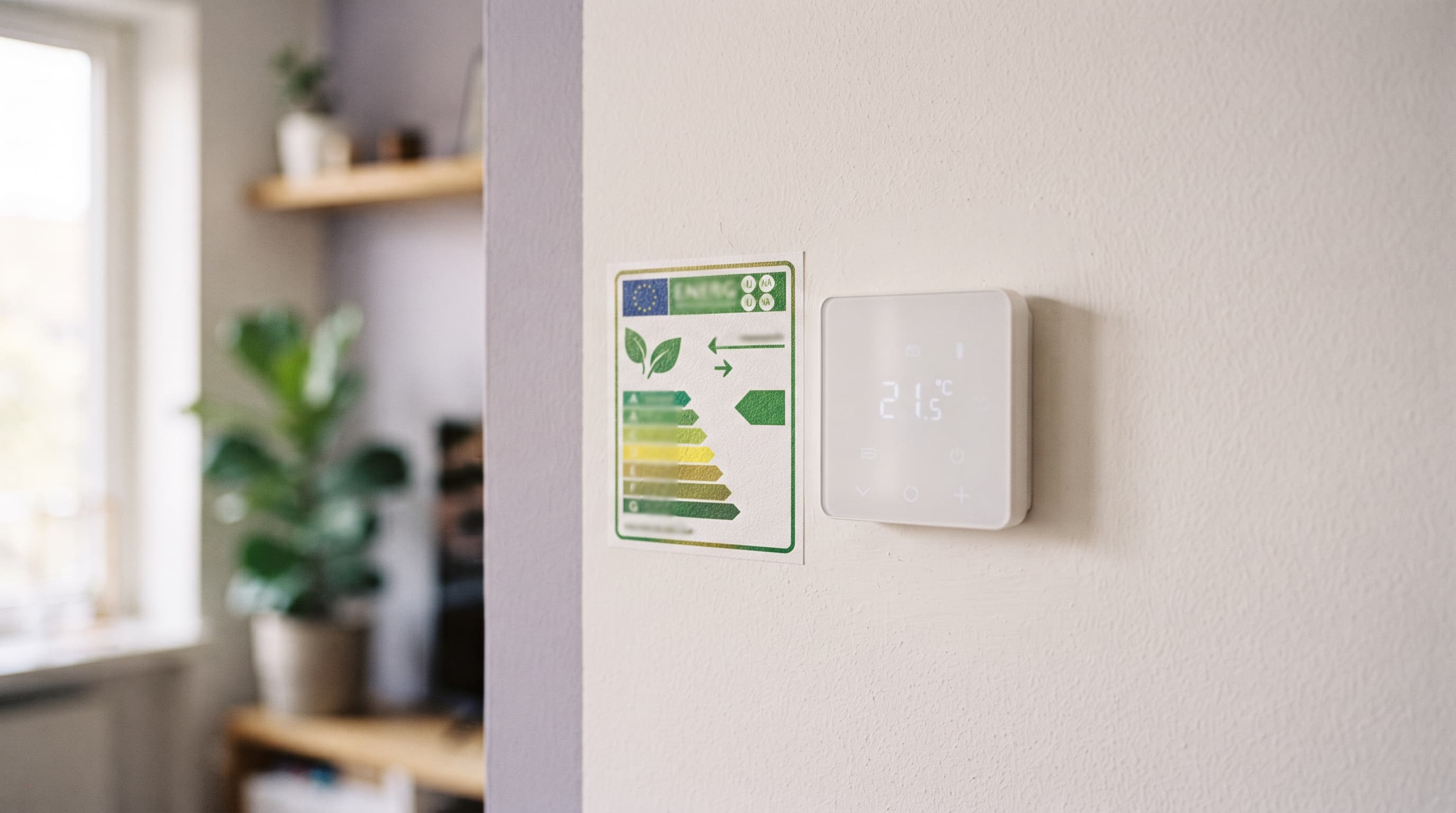
An energy label shows on a scale from A++ (very efficient) to G (very inefficient) how energy-efficient a home is, based on things like insulation, the heating system and any solar panels. The better the label, the lower your energy costs usually are for comparable use.
Minimum label C since 2026
Since 1 January 2026, energy label C has been the minimum requirement for rental homes. This means landlords may in principle no longer let homes with label D, E, F or G. The measure is meant to speed up making rental housing more sustainable and to protect tenants against high energy costs in poorly insulated homes.
Your landlord’s obligation
At the start of your tenancy your landlord must give you a valid energy label. An energy label is valid for at most ten years: if your home’s label is older, the landlord must have a new label registered to meet the current requirements.
What if the label is missing or too old?
Supervisory bodies, including municipalities, can fine landlords who let homes without a valid energy label or that do not meet the minimum. Municipalities can take active enforcement action and require landlords to take measures within a set period, or stop the letting (temporarily) until the energy label has been improved.
Exceptions
Limited exceptions apply, including for listed buildings and homes where technical limitations make improvement impossible. In those cases the landlord must show through a separate procedure that upgrading to label C is not reasonably feasible.
What can you do as a tenant?
If there is no energy label with your tenancy agreement, ask your landlord for it explicitly. If your home turns out to have a worse label than the law allows, you can report it to your municipality. An outdated energy label can also be a sign of wider overdue maintenance; in that case also read defects in your rental home: what must the landlord repair? More about your general rights as a tenant is in rights and obligations of a tenant: the complete overview.
Frequently asked questions
Does the label requirement also apply to tenancies that have been running longer?
Yes. The minimum applies to new lettings as well as existing tenancies. So landlords also have to bring homes under running contracts up to the minimum over time.
Can I request an energy label myself if my landlord does not?
Requesting an energy label is in principle the landlord’s responsibility. If they fail to do it, you can contact the municipality, which supervises the label requirement.
What if my home cannot reach label C because of technical limitations?
For listed buildings and homes where improvement is not technically feasible, special procedures apply in which the landlord must show that improvement is not possible.
Search rental homes in the top cities
See the current listings and set up rental alerts for popular cities in the Netherlands:
Read also
Ready to start searching?
RentBolt searches the listings of 500+ letting agents across the Netherlands in one overview, and alerts you as soon as something that suits you becomes available.