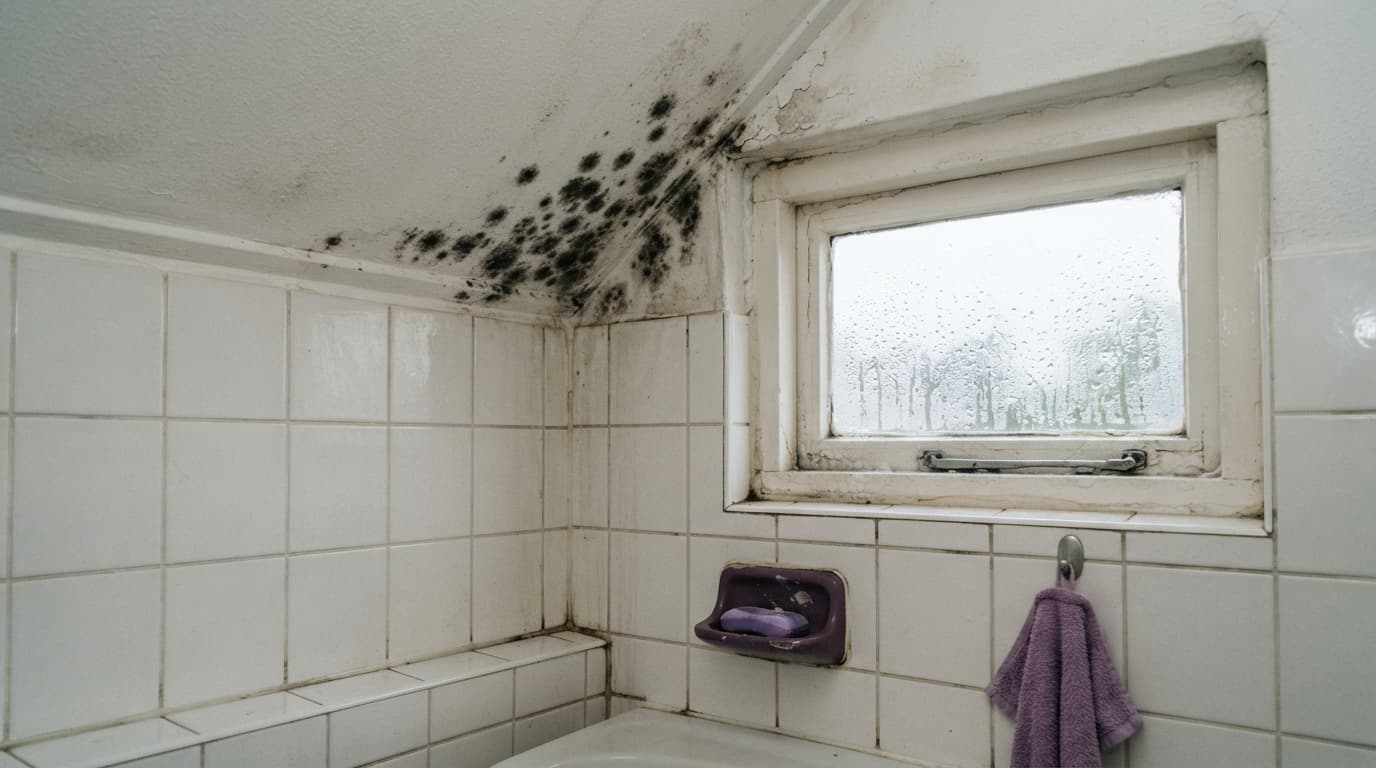
Mould in your rental home: who is responsible and what can you do?
2 min readBy the RentBolt editorial teamUpdated onBlack patches in the corner of the bathroom or behind the wardrobe in the bedroom: mould is common in Dutch rental homes. It is not only unsightly, it can also cause respiratory complaints. The question is always: who has to fix it?
Where does mould come from?
Mould grows where it is damp and cold. The moisture comes from inside (showering, cooking, drying laundry, breathing) or from outside (a leak, rising damp, a broken gutter). Cold spots in walls or around window frames, known as cold bridges, make that moisture condense there.
Defect or your own fault?
| Cause | Responsible |
|---|---|
| Leaks in the roof, facade, pipes or gutters | Landlord |
| Rising damp or poor insulation (cold bridges) | Landlord |
| No or broken ventilation facilities, such as extractors or vents | Landlord |
| Not ventilating or airing while the facilities work | Tenant |
| Cleaning small mould spots, maintaining sealant joints | Tenant |
The general principle: anything that makes the home not properly habitable is a defect the landlord is responsible for. See also defects in your rental home: who repairs what?
What you must do yourself
- Always keep ventilation grilles open and leave mechanical ventilation running.
- After showering, open a window or let the extractor run for at least half an hour.
- Dry your laundry outside or in a vented dryer as much as possible.
- Place furniture a few centimetres away from external walls.
- Remove small spots with a mould cleaner and keep before-and-after photos.
What the landlord must do
If there is a structural cause, the landlord must remove it, not just have the spot painted over. Think of repairing a leak, improving the ventilation or insulating a cold wall. Mould that keeps returning after painting almost always points to a cause that has not been solved.
If the mould keeps coming back
- Report it in writing with photos, dates and what you already do to ventilate.
- Measure the humidity for a few weeks with an inexpensive hygrometer. Readings consistently above 70% despite ventilating support your case.
- Put the landlord in default with a final deadline; see putting your landlord in default.
- Request a rent reduction via the Huurcommissie or the subdistrict court; see requesting a rent reduction for defects.
- Involve the municipality in case of serious mould that threatens your health. The municipality can require the landlord to improve the home.
Frequently asked questions
Is mould in a rental home a defect?
Often, yes. If the mould is caused by a structural problem such as a leak, rising damp, cold bridges or poor ventilation facilities, it is a defect the landlord must fix. If it only arises because you do not ventilate, it is your responsibility.
Can I get a rent reduction because of mould?
Yes, if the mould is a defect and the landlord does not fix it after you report it. With social rent and mid-rent you apply via the Huurcommissie, in the free sector via the subdistrict court.
Can the landlord just tell me to ventilate better?
They can say that, but if the home develops mould even with normal ventilation, they remain responsible. Show that you ventilate, for example with photos of open vents or the readings of a humidity meter.
Search rental homes in the top cities
See the current listings and set up rental alerts for popular cities in the Netherlands:
Read also
Ready to start searching?
RentBolt searches the listings of 500+ letting agents across the Netherlands in one overview, and alerts you as soon as something that suits you becomes available.